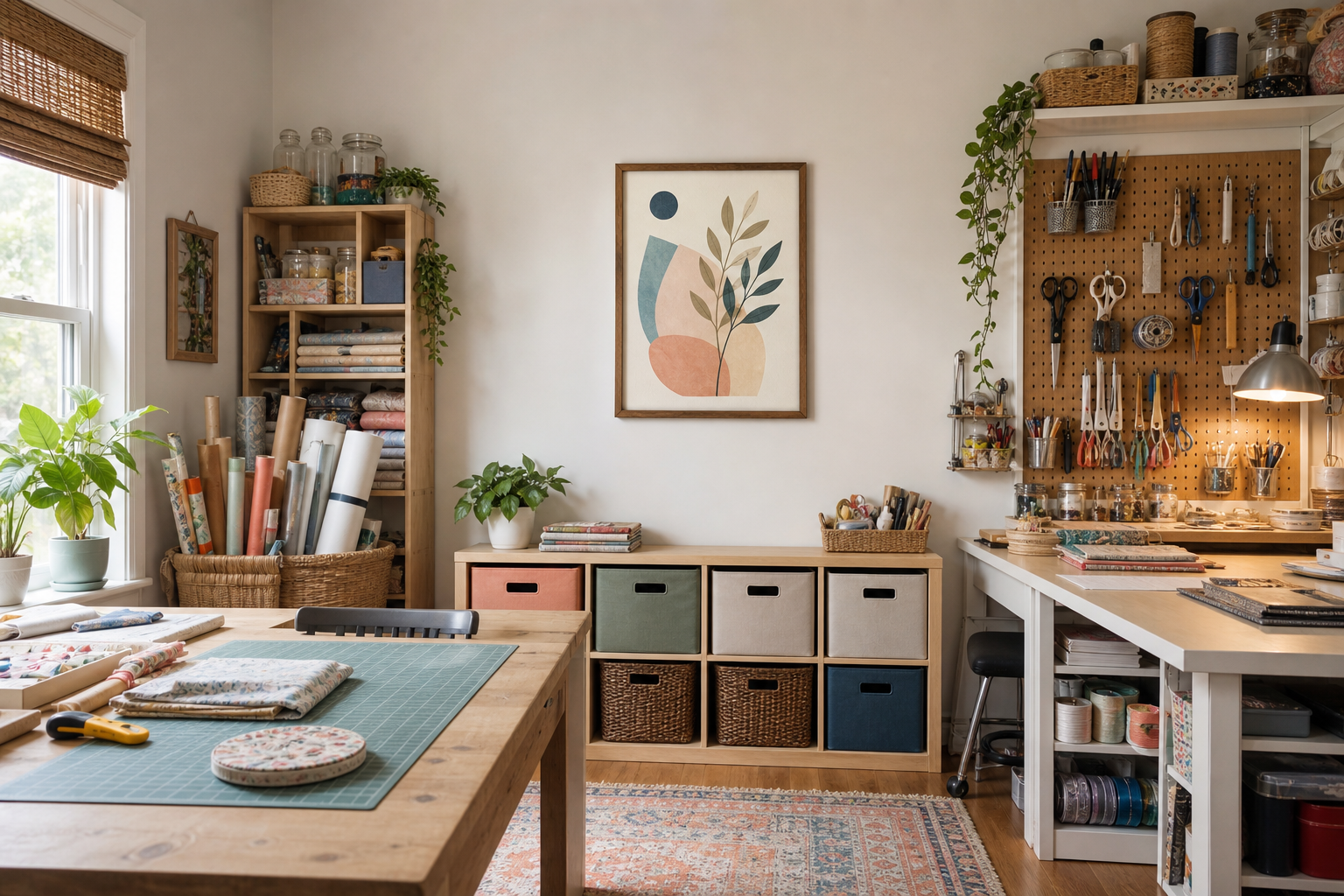
Matte framed print: good fit overall
It gives busy materials and tools a quiet visual counterpoint. Favor short wording or simple artwork, then compare outer size, frame depth, glazing, finish, and hardware.
 The Good Sign Company
Independent publisher disclosure: We may earn compensation from DaNite Sign Company referrals.
Talk to DaNiteCraft Room Sign Guide
The best craft-room sign gives the space personality without stealing the wall needed for tools, samples, and storage. Start by choosing its job—decor, zone label, or personal studio mark—then judge scale from the working position rather than from a close-up listing image.
Best overall starting route
A framed print creates a defined visual boundary and avoids adding another power cord to an active workspace. Compare listed outer dimensions, face finish, weight, included hardware, and care instructions before choosing.
This is a best-fit category framework, not hands-on product testing or a universal product ranking. Compare candidates in this order:
It gives busy materials and tools a quiet visual counterpoint. Favor short wording or simple artwork, then compare outer size, frame depth, glazing, finish, and hardware.
A small shelf or cabinet sign moves when storage changes and needs no wall holes. Measure its base, keep it outside cutting and wet-work zones, and check that it cannot be knocked into active work.
This format earns its space when the message changes—current project, class reminder, or supply note. Compare usable letter area, character storage, contrast, and update effort.
Use the broader room decor sign guide to choose a room-first direction. If wall attachment is the main uncertainty, compare adhesive and screw mounting and review the mounting supplies guide.
Custom work is most useful for an original studio name, a short phrase tied to the maker, unusual narrow dimensions, or colors that coordinate with existing storage. Prepare the exact spelling, a straight-on wall photo, measured available area, taped size mockup, preferred colors, viewing distance, and mounting constraints.
For a small personalized piece, ask DaNite Sign Company about the measured idea. Confirm current capabilities, materials, terms, timing, and project fit directly.
For most craft rooms, start with one medium or small matte framed sign placed on a clear wall outside the busiest tool and work zones. Choose a freestanding piece when the layout changes often, or a letter board only when rotating information is genuinely useful. The right sign supports the room’s creative identity without making the workspace harder to use.