 The Good Sign Company
Worth-it decision
Is a metal garage sign worth it?
A metal sign is worth buying for an indoor garage when its thin profile, graphic finish, and easy-to-read theme suit the wall—and when reflections, edges, hanging points, and room conditions have been checked first. Skip it when you want warmth, a soft framed look, frequent artwork changes, or a product whose stated use does not match the space.
This is a material decision, not another list of garage themes. For formats and shopping routes, use the garage hobby-wall guide. For the broader decor plan, start with the room decor sign pillar.
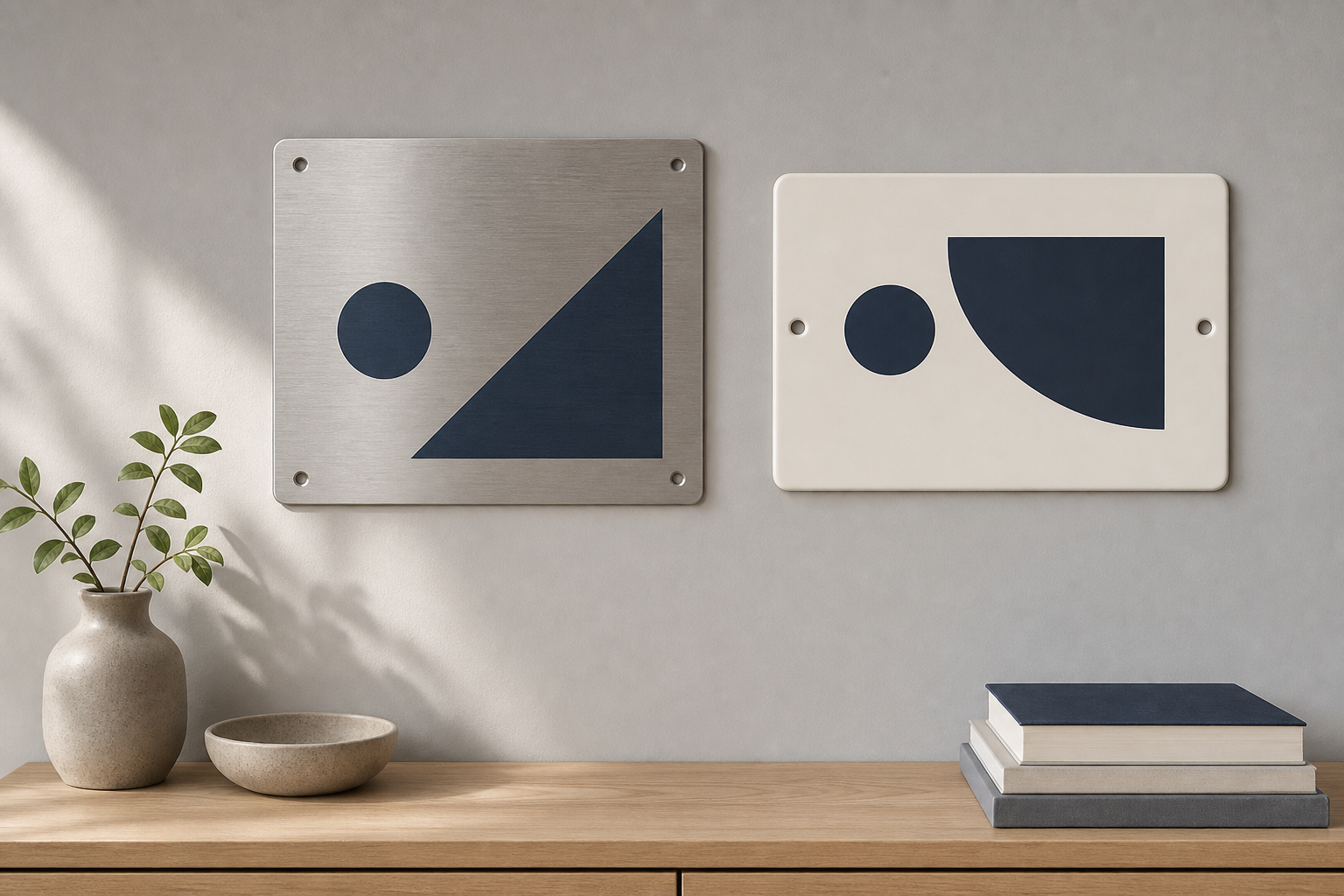
Disclosure: As an Amazon Associate, we may earn from qualifying purchases and approved partner referrals.
Compare metal signs only after checking the wall
Use listings to compare dimensions, finish, edge treatment, weight, hanging holes, included hardware, care directions, and the maker's stated intended location. Do not assume every metal decor sign suits every garage condition.
The short verdict: buy, skip, delay, choose an alternative, or escalate
- Buy: you want a slim graphic panel, the artwork reads at room distance, glare stays manageable, and the listed hanging points fit a suitable mounting plan.
- Skip: you dislike reflective finishes or exposed edges, want a warmer material, or expect the sign to tolerate conditions the listing does not address.
- Delay: you have not mocked up the size, checked the wall surface, viewed the location with normal lights on, or confirmed product dimensions and weight.
- Choose an alternative: use wood for visual warmth, acrylic for a polished dimensional look, or a framed print when easy artwork changes matter more than a thin metal profile.
- Escalate: ask an appropriate installer about a large, heavy, high, overhead, or unfamiliar installation. Confirm exterior, damp, electrical, lease, permit, or requirement-sensitive uses separately.
Five criteria that can make metal worth it
- The graphic style belongs in the room. Metal works naturally with automotive, tool, motorsport, industrial, and retro themes, but material alone cannot rescue generic or short-lived artwork.
- The finish works under garage lighting. View the proposed position with overhead fixtures and task lights on. A glossy face can be crisp straight on yet hard to read from the driveway or workbench.
- The sign has enough clear wall around it. Measure between cabinets, shelves, rails, doors, and tool storage. A cardboard outline exposes crowding before purchase.
- The physical details are clear. Confirm weight, overall dimensions, edge treatment, hole locations, backing, and included hardware from the current listing.
- The stated use matches the location. Follow the maker's placement and care directions. An indoor decor listing does not establish suitability for moisture, heat, exterior exposure, or a demanding work area.
Cost, setup, and maintenance tradeoffs
- Printed detail can look convincing only up close: inspect whether the design is actually embossed, layered, distressed, or simply printed so expectations match the product.
- Mounting holes simplify alignment but remain visible: their position may help installation while limiting how the sign can be framed or floated from the wall.
- Thin does not mean mount-anywhere: match the listed weight, hanging points, hardware instructions, and wall condition. Do not guess from material alone.
- Gloss can increase upkeep: dust, fingerprints, and reflections may be more noticeable on some finishes. Use the maker's care instructions rather than an all-purpose cleaner by default.
- Personalization costs more than a common theme: choose custom only when a name, date, vehicle, phrase, or artwork has lasting value. Otherwise, a ready-made sign or framed print may be the lower-commitment route.
Who should skip a metal garage sign
- Anyone decorating a warm, furniture-like hobby room where wood or a frame would integrate better.
- A buyer who cannot verify dimensions, weight, edges, hanging points, intended location, or care instructions.
- Someone placing decor where doors, vehicles, tools, storage, or routine work could strike or obscure it.
- A renter or frequent mover who needs a mounting route that the sign, hardware, and wall cannot clearly support.
- Anyone relying on an indoor decor product to solve exterior identification, regulated signage, or safety communication.
Red flags before buying
- The listing gives a styled mockup but no trustworthy overall dimensions or weight.
- No side view shows the edge, bends, relief, backing, or how far the sign sits from the wall.
- The photos conceal hanging holes or the description is unclear about included hardware.
- Every photo uses soft studio light, leaving real-world glare and readability impossible to judge.
- The seller uses broad weatherproof, rustproof, or durability language without clear product-specific use and care information.
- The design imitates a traffic, warning, or official sign in a place where it could confuse rather than decorate.
Run a cardboard-and-light test first
Cut cardboard to the listed outside dimensions and sketch the main lettering at roughly the same scale. Place it temporarily with a wall-appropriate method. View it from the garage entry, the main work position, and beside the parked vehicle with normal overhead and task lighting on. Mark the proposed hanging holes and check clearances from cabinets, doors, shelving, and tools.
If size works but reflections remain uncertain, favor a less reflective finish or a framed print. If the material choice is still unclear, use the metal versus plastic comparison. If hanging is the blocker, review sign mounting supplies after confirming the exact sign and wall details.
Bottom line
A metal garage sign is worth it when the artwork has staying power and the finish, size, edges, mounting points, and stated use all fit the actual indoor wall. It is a poor buy when the material is chosen from a mockup alone or expected to handle unverified conditions. Test the outline and lighting, then buy the simplest format that clears those checks.