 The Good Sign Company
Attachment comparison
Magnetic sign vs adhesive sign: start with the surface
A magnetic sign is useful only when the exact surface attracts and supports it. An adhesive-backed sign can work on a wider range of specifically approved smooth surfaces, but repositioning and removal are usually less forgiving. The better choice comes from the substrate, sign construction, update routine, and product instructions—not from a promise that either method is universally removable.
Disclosure: As an Amazon Associate, we may earn from qualifying purchases and approved partner referrals.
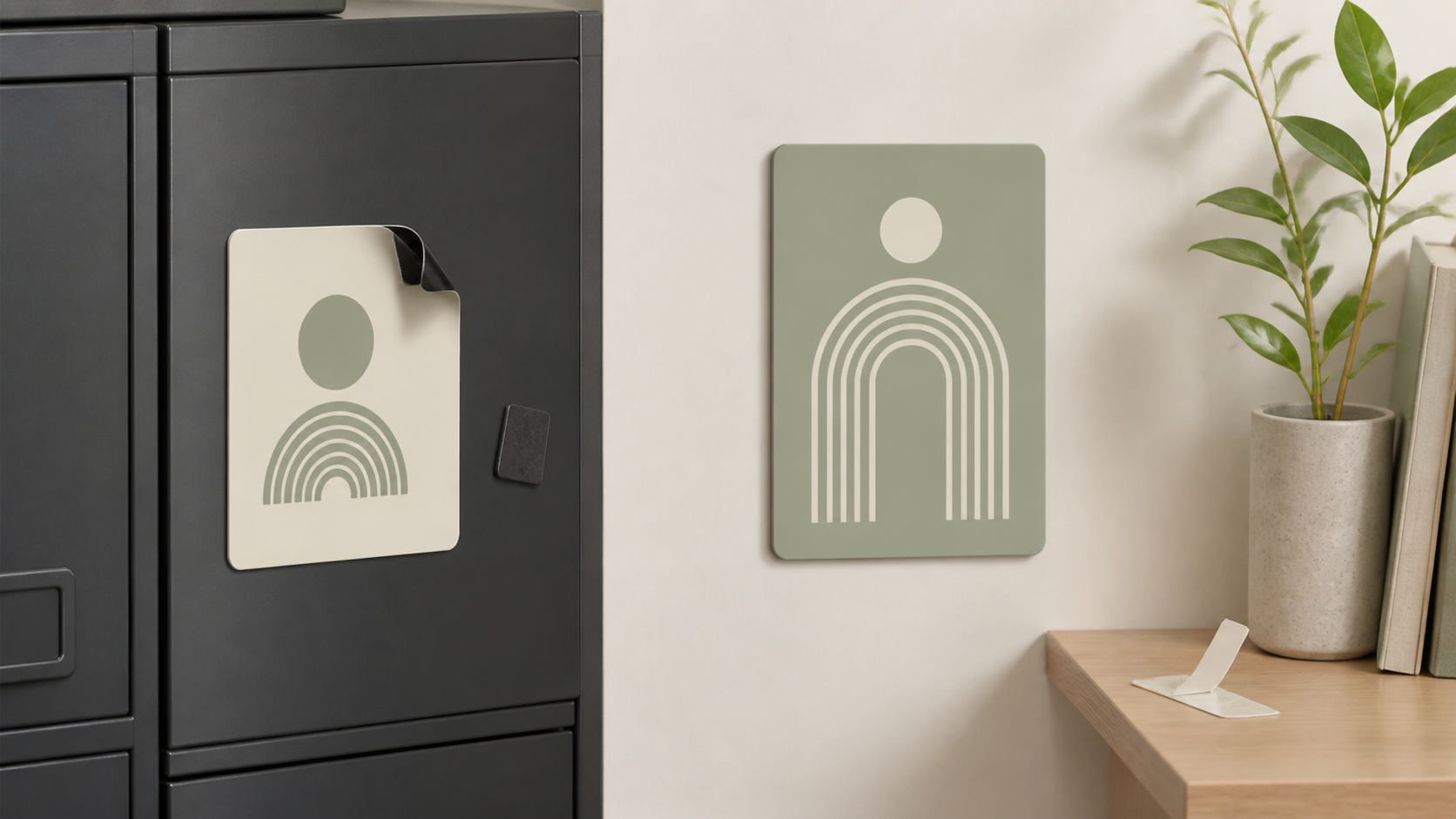
Compare the two product categories
Magnetic indoor signs
Check the listed material, finished dimensions, full-back or strip construction, and intended surface before choosing a format.
Browse category: Browse magnetic indoor signsAdhesive-backed indoor signs
Compare rigid plaques, flexible labels, and removable products only after reading the approved-surface and removal directions.
Browse category: Browse adhesive-backed indoor signsQuick decision
- Choose magnetic when you have tested the exact surface, the sign is made for that use, and you expect to move or swap the message often.
- Choose adhesive-backed when the product explicitly names the clean, smooth indoor surface and the sign can remain in one position through its intended use.
- Choose neither yet when the substrate, finish condition, sign weight, attachment coverage, or removal instructions are unknown.
Who a magnetic sign fits
Magnetic signs fit steel cabinets, some appliance panels, compatible metal doors, shelving, or fixtures where a small test magnet confirms attraction at the intended spot. They are especially practical for names, room status, schedules, or labels that move between known compatible surfaces.
- Frequent repositioning: lifting and resetting the sign can be simpler because there is no adhesive bond to remake.
- Surface access: the sign can usually be removed so the face and mounting surface can be cleaned separately.
- Tradeoff: aluminum, some stainless steels, nonmetal panels, and metal hidden behind thick finishes may not provide the expected attraction. Test the exact location.
- Tradeoff: corners can curl, edges can catch, and a partial magnetic strip behaves differently from a flexible full magnetic back.
Who an adhesive-backed sign fits
Adhesive-backed signs fit a reader with a stable location and a surface that the specific product instructions approve. A thin label, foam-tape plaque, removable strip system, and pressure-sensitive vinyl are not interchangeable, so match the attachment type to the sign and substrate.
- Broader possible surface range: a product may be intended for a named painted wall, glass, tile, laminate, or another smooth surface even when magnets cannot attach.
- Low-profile placement: a full adhesive back can hold a flat sign close to the surface when correctly applied.
- Tradeoff: repositioning can weaken or destroy the adhesive, stretch the sign, or require a new attachment product.
- Tradeoff: removal can leave residue or affect a finish. “Removable” is product- and surface-specific, not a universal damage-free promise.
Tradeoffs that change the choice
- Substrate: test magnetic attraction; for adhesive, identify the surface material, coating, texture, cleanliness, and condition.
- Sign construction: compare flexible sheet, rigid plaque, laminated print, full backing, corner magnets, tape strips, or mounting tabs. Edges and weight distribution matter.
- Update frequency: magnetic is usually the clearer path for regular swaps on compatible surfaces; adhesive suits messages expected to stay put.
- Appearance: a flexible magnet may reveal surface contours, while a rigid adhesive plaque can bridge minor irregularities but still needs the approved contact area.
- Removal plan: magnetic signs need a reachable edge; adhesive products may need a pull tab, heat, solvent, or another maker-specified method. Follow the exact directions.
- Cleaning: confirm whether cleaning products, moisture, or residue can affect the printed face, magnetic back, adhesive, or underlying finish.
Setup and maintenance
For a magnetic sign, clean the sign back and compatible surface as directed, let both dry, then place the sign without trapping grit. Check that the whole sign sits flat and does not interfere with handles, hinges, seals, ventilation, or moving parts. Recheck edges after the sign has been moved or cleaned.
For an adhesive-backed sign, confirm surface compatibility and any temperature, preparation, pressure, or wait-time instructions before peeling the liner. Make a paper template first because many adhesive products allow little correction after contact. Keep pull tabs or removal edges accessible when the system uses them.
Inspect either attachment if an edge lifts, the sign slides, the surface gets warm or damp, cleaning routines change, or the fixture moves. Use product-specific guidance for any valuable, powered, overhead, exterior, vehicle, or safety-related placement.
Skip criteria
- Skip magnetic when a test magnet does not attract firmly across the exact placement area or the maker does not support that use.
- Skip adhesive when the surface is dusty, textured, damp, recently painted, delicate, failing, or absent from the approved-surface list.
- Skip both when the sign could fall over a bed, seat, food area, valuable object, doorway, or busy path without a product-specific installation plan.
- Skip these general indoor routes for vehicles or outdoor exposure unless the specific sign is documented for that exact use.
- Use a tabletop stand, frame, holder, suction system for compatible interior glass, or mechanically mounted sign when the surface checks do not support either option.
Next steps
If the sign is specifically a replaceable office label, use the magnetic vs adhesive nameplate-holder comparison; it adds insert size, loading clearance, reassignment frequency, and holder profile to the substrate decision. If the message needs frequent handwritten changes, continue with the magnetic dry-erase vs adhesive dry-erase comparison; the writable face adds marker, cleaning, flatness, and storage criteria beyond the backing choice.
Use the sign mounting supplies pillar to compare wall hardware, standoffs, frames, cable management, and non-wall displays. If adhesive is still a fit, compare removable mounting strips for lightweight signs by wall finish, sign back, application, and removal access. Use the adhesive vs screw mounting guide when a drilled connection remains possible, or the interior-glass sign-holder guide when a compatible smooth glass surface is the real constraint.