 The Good Sign Company
Buyer guide
How to Choose Microfiber Cloths for Dry-Erase Sign Boards
The right cloth is not simply the softest-looking pack. It must match the board maker’s care guidance, fit the writing area, stay separate from general cleaning rags, and have a laundering and replacement routine the sign owner can actually maintain.
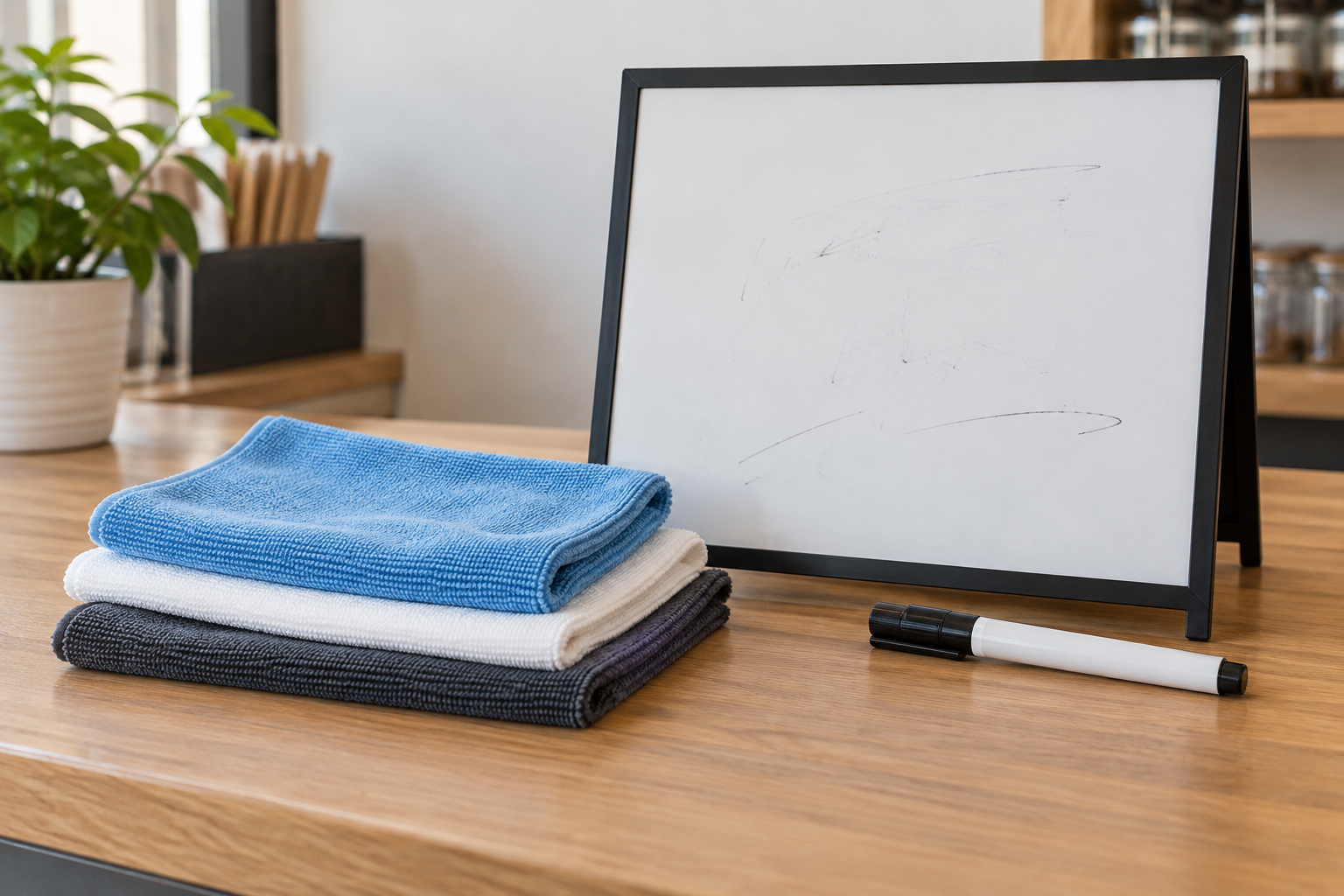
Compare cloths made for a repeatable board-care routine
Confirm that the board manufacturer permits a reusable microfiber cloth before shopping. Then compare current listing dimensions, edge construction, care instructions, and pack size against the board and update schedule.
Quick comparison framework
| Cloth format | Useful for | Verify | Skip when |
|---|---|---|---|
| Small low-pile cloth | Compact counter boards and detailed grid cells | Finished size, edge finish, and storage spot | Full-board resets make the small surface inefficient |
| Medium folded cloth | Routine messages with enough fabric to rotate to a clean face | Folded grip, laundering instructions, and drying space | The fold is awkward in narrow cells |
| Multipack | Teams that rotate clean cloths through a labeled supply system | Piece count, identical sizing, and separation from other cleaning tasks | No one owns collection and laundering |
Start with the board, not the cloth listing
Dry-erase sign boards, coated message boards, laminated inserts, and clear sleeves can look similar while carrying different care instructions. Identify the exact writing surface and follow its maker’s cleaning guidance. A cloth category page cannot override instructions that call for a particular tool, cleaner, or replacement process.
Measure the usable writing area and the narrowest cells or corners that need wiping. Also record update frequency, who performs the reset, and where a clean cloth can stay without being confused with a counter-cleaning rag.
Selection criteria that change the decision
Finished size and fold
A cloth should give the updater a stable grip while still reaching the smallest message zones. Larger fabric offers more clean faces when folded, but it can bunch around a compact tabletop board. Compare stated dimensions with the actual writing area.
Surface and edge construction
Check the current listing for fiber composition, pile description, seams, and edge finish. Do not assume every product labeled microfiber is identical or approved for every board. If the board maker warns against a fabric or edge type, remove it from consideration.
Dedicated storage
Store board cloths in a labeled tray, bin, or drawer near the sign. Keeping them separate from cloths used with furniture polish, oils, abrasive debris, or general cleaners reduces mix-ups. A color-coding scheme only helps if the team documents and follows it.
Laundering and replacement
Use the product maker’s washing and drying instructions. Decide who collects used cloths, how clean and used pieces stay separated, and what condition triggers replacement. Do not infer washability, dryer suitability, or a service life when the current instructions do not state it.
A practical buying checklist
- Verify that the board maker permits a reusable microfiber cloth.
- Measure the full writing area and its narrowest cells.
- Check finished cloth dimensions, pile, seams, and edge finish.
- Choose a pack quantity that matches the real laundering cycle.
- Assign clean, used, and general-purpose cloths separate storage.
- Read the current washing and drying instructions before ordering.
- Set a replacement rule based on condition and cleaning performance, not an invented lifespan.
How cloths fit with erasers and markers
A cloth can be the main routine tool when the board maker approves it, or a secondary detail tool for corners and narrow grid cells. If the team prefers a dedicated grip, compare dry-erase eraser formats. Match the writing tool separately with the dry-erase marker guide.
For a schedule that is still being selected, start with the dry-erase schedule-sign guide. That broader decision sets the grid, reading distance, placement, and update owner before accessories are purchased.
Who should skip this category
Skip reusable cloths when the board instructions specify another method, when the surface is unknown, or when the message is not made with a compatible dry-erase marker. A dedicated eraser may be simpler for a single small board with a built-in tray. Disposable supplies may fit a documented facility procedure, but compare that choice against waste, storage, and procurement requirements rather than assuming it is safer or more effective.
Bottom line
Choose a cloth only after confirming surface compatibility. For one compact board, a small or medium cloth with a dedicated storage spot is usually the clearest starting format. For a team or several signs, a multipack works only when clean-cloth rotation, laundering, and replacement ownership are defined.
Category routeCompare dry-erase board cloth formats (affiliate link)