 The Good Sign Company
Counter-Sign Finishing Decision
Is a corner rounder worth it for laminated counter signs?
A corner rounder is worth considering when you repeatedly produce compatible laminated inserts, one consistent radius fits the displays, and the finishing step will be used often. Delay until the finished laminate and holder clearance are measured. Skip it when sign volume is low, square corners already fit, materials vary, or a print service can finish the occasional batch.
Start with the small-business sign planning pillar if the message, location, or update routine is unsettled. This page evaluates tool ownership; it does not promise professional results, safer corners, or compatibility with every laminated material.
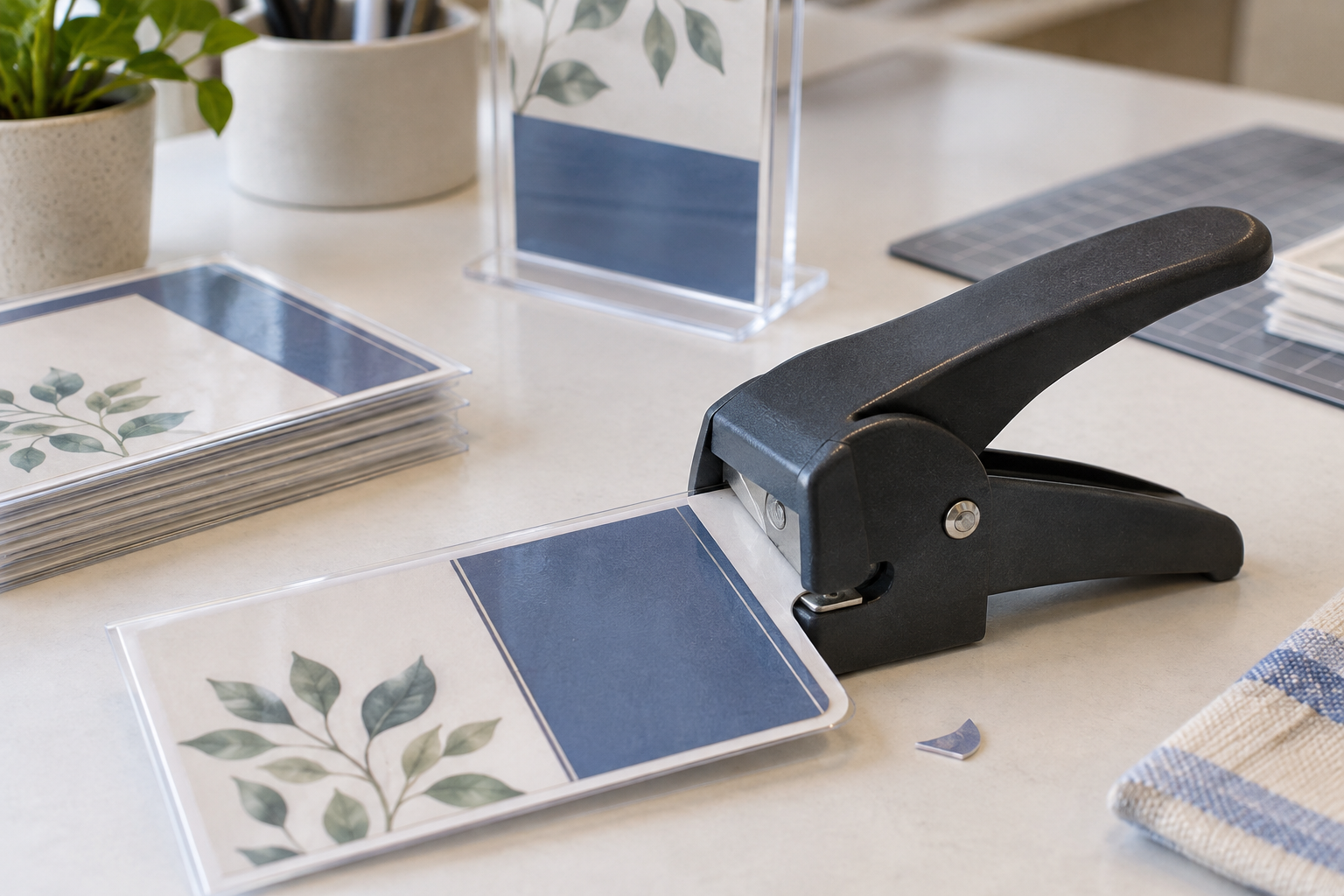
Compare tools after testing the complete insert
Measure the finished laminated thickness, verify the desired radius against the actual holder, and count the batches you expect to finish. Then use the corner-rounder buying guide to compare current manufacturer-supported materials, radius options, alignment method, workspace, offcut collection, and operating instructions.
The short answer: buy, delay, skip, or outsource
| Decision | When it fits | Next check |
|---|---|---|
| Buy | You produce recurring compatible inserts, use a repeatable radius, and have a defined finishing station. | Trial the exact finished laminate and confirm it still fits its holder. |
| Delay | The laminate thickness, sign size, holder, radius, or monthly volume is changing. | Keep square corners or order one finished sample first. |
| Skip | Volume is occasional, square corners work, or documented material limits exclude your insert. | Spend on clearer artwork, a better holder, or replacement inserts. |
| Outsource | You need infrequent batches, several radii, or a finish the in-house process cannot repeat. | Confirm finished dimensions and radius in the provider quote. |
Five criteria that decide the purchase
- Real production volume: count inserts made recently and forecast the next few batches. Do not justify a tool with vague plans.
- Finished-material compatibility: evaluate paper and laminate together after sealing, then compare the complete thickness and construction with current manufacturer guidance.
- Radius consistency: confirm one documented radius suits the holder and visual system. A radius that looks good loose may expose gaps or bind in a sleeve.
- Alignment tolerance: check how the tool registers each corner and whether the cut avoids text, borders, QR-code quiet space, and the laminate seal.
- Workflow ownership: name who trims, rounds, checks, cleans up offcuts, stores the tool, and replaces rejected inserts.
Cost, setup, and maintenance tradeoffs
Compare the current tool cost with the number of compatible signs produced—not with a guessed sales benefit. Include rejected inserts, operator time, work-surface space, offcut handling, and the chance that a different holder or laminate makes the radius obsolete. For low volume, square corners or outsourced finishing can cost less in attention even when the per-piece charge is higher.
Keep the tool on a stable work surface, follow current operating instructions, test scrap made from the exact finished material, and inspect the first completed insert in its holder. Follow maker maintenance guidance and stop using a tool that is damaged, misaligning material, or requires force outside its documented routine.
Red flags and who should skip
- The listing omits supported materials, thickness, radius, or operating instructions.
- Product photos are being treated as proof that a finished insert will fit.
- The cut would reduce the laminate's sealed margin or crowd printed content.
- Different holders require different corner shapes, but the tool has one fixed radius.
- Staff would need to force, fold, or repeatedly reposition material.
- The tool would serve one small batch with no defined future use.
- The goal is to claim safer corners or a professional finish without supporting evidence.
Choose the alternative by the constraint
- Only a few inserts: keep square corners if they fit, or ask a print service for a finished quote.
- No heat-lamination workflow: compare self-sealing sheets for small counter signs, then verify the finished material against any rounder.
- Frequent changes but no need to seal each sheet: use a reusable sleeve or rigid holder and replace the paper insert.
- Uncertain equipment route: compare a desktop laminator with self-sealing sheets before adding another finishing tool.
A low-cost proof before buying
- Choose one current counter sign and record its holder opening and visible area.
- Make the insert with the exact paper, laminate, printer, and sealed margin normally used.
- Mark the proposed radius on scrap or a provider-finished sample without trimming the live sign.
- Check holder insertion, edge coverage, artwork clearance, and removal access.
- Estimate how many identical compatible corners will be produced each month.
- Buy only when current product guidance matches the material and repeated workflow.
Bottom line
Buy when repeat volume, finished-material compatibility, a stable radius, holder clearance, and an owned cleanup routine all line up. Delay if any input is unknown. Skip or outsource when production is occasional, materials vary, or square corners already do the job.