 The Good Sign Company
Worth-it decision
Is a French cleat worth it for a heavy indoor sign?
A French cleat can be worth using when a rigid sign has a maker-confirmed structural attachment area, the finished weight is known, the wall construction is verified, and the exact system instructions cover the complete setup. Skip it when the sign back cannot accept the sign-side rail or when lift-on clearance is missing. Pause for qualified help when weight, substrate, concealed services, or the consequences of failure are uncertain.
This page answers whether the mounting format belongs in the plan. If that answer is already yes, use the French cleat kit guide to compare documented kit fit. If you are still choosing the visual mounting style, compare French cleats and standoff mounts.
Disclosure: As an Amazon Associate, we may earn from qualifying purchases and approved partner referrals.
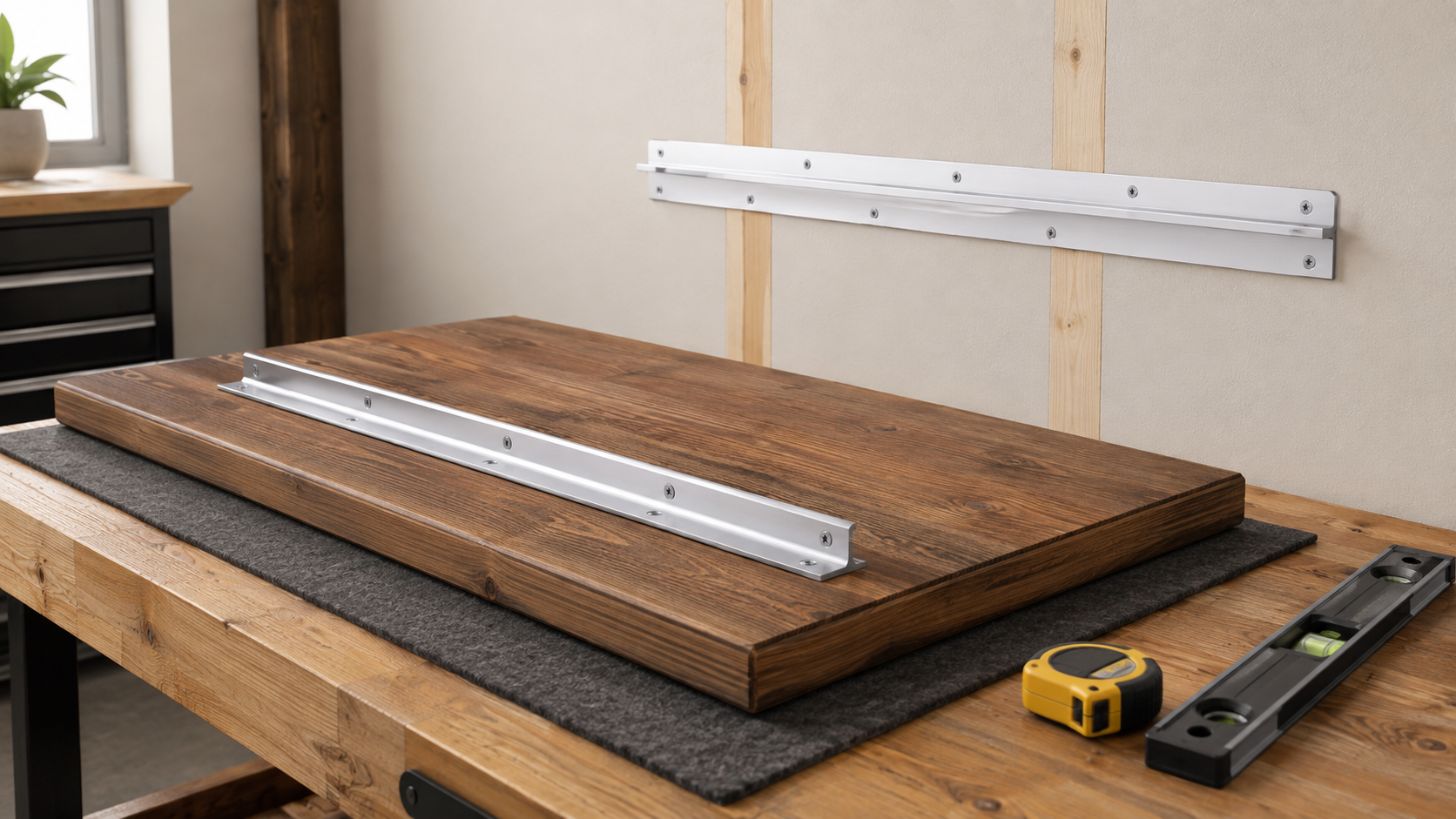
Compare hardware only after the unknowns are resolved
Use the finished sign documentation and current cleat instructions to check back construction, rail engagement, required fasteners, wall substrate, and removal clearance. A category listing is not evidence that a particular system is appropriate for your sign.
Quick verdict: use it, skip it, or get help
- Use it as a candidate: the sign is rigid, its finished weight and structural mounting area are documented, the wall is known, and a current system covers those conditions.
- Skip it: the sign is flexible, thin, hollow, damaged, or lacks a confirmed place for the sign-side attachment.
- Choose another format: use a stand or maker-specified mount when the sign must move often, cannot lift into place, or needs frequent rear access.
- Get qualified help: stop when the wall or sign construction is unknown, utilities may be concealed, masonry or unusual framing is involved, or failure could injure someone or damage valuable property.
The six facts that decide whether a cleat is worthwhile
- Finished sign weight: get a documented value from the sign maker or accurately weigh the complete sign. Do not turn “heavy” into a load assumption.
- Sign-back construction: confirm the rail can attach to a structural area with the fastener type and depth required by the current instructions. A decorative skin is not automatically structural.
- Wall construction: identify what is behind the finish and where suitable attachment locations exist. Included hardware does not automatically fit every wall.
- Complete-system documentation: evaluate the rail, sign-side attachment, wall-side attachment, fasteners, spacers, and any specified restraint together—not a headline capacity in isolation.
- Lift and service clearance: measure the upward movement needed to engage and later remove the sign. Check ceilings, shelves, trim, cords, vents, and access panels.
- Consequence of failure: a high or overhead position, busy path, seating area, bed, valuable equipment, or uncertain installation raises the case for a qualified installer.
What a French cleat changes—and what it does not prove
A two-part cleat can keep most hardware behind a compatible rigid sign and may spread attachment points along a rail. It can also allow the sign to be lifted off later when enough clearance exists. Those are format traits, not a promise that a particular sign, rail, wall, or fastener combination will hold.
The cleat does not repair weak sign construction, identify hidden framing, select wall fasteners, or validate a load. The sign maker, hardware manufacturer, wall conditions, and installer scope still govern the plan. Powered signs also need their maker-specified mounting, ventilation, wiring-access, and service requirements preserved.
A go/no-go worksheet before shopping
- Record the finished width, height, depth, and verified complete weight.
- Mark the usable structural area on the sign back, including fastener-depth limits.
- Document the wall finish, underlying construction, and confirmed attachment locations.
- Measure the clear rail length plus the vertical lift needed for installation and removal.
- Note cords, service panels, ventilation, trim, shelving, and other conflicts.
- Read the current instructions for every part of the proposed system and list any condition they do not resolve.
If any essential line remains blank, delay the hardware order. This worksheet organizes the decision; it is not an engineering calculation, installation approval, or substitute for current manufacturer and sign-maker instructions.
When another mounting path is the better answer
A tabletop or floor stand can be more practical when the display must relocate. Standoffs may fit a predrilled rigid panel whose visible hardware and projection are intentional. Maker-specified brackets may be necessary for powered or internally framed signs. For lighter framed pieces, conventional picture-hanging hardware may be simpler when its instructions match the frame and wall.
Do not choose a cleat merely to avoid visible hardware. If concealment forces uncertain fastening, blocks service access, or creates an awkward lift, the visual benefit does not justify the unresolved installation.
Bottom line
A French cleat is worth considering for a heavier rigid indoor sign only when the sign, wall, hardware, clearances, and current instructions form one documented plan. Its concealed profile and lift-off format can be useful; neither replaces verified construction or competent installation. When the critical facts are unknown—or the placement makes failure consequential—pause and involve the sign maker or an appropriate qualified installer.
Next, compare cleats with standoffs, review French cleat kit criteria, or return to the sign mounting supplies pillar.